Log Rot Repair: Signs, Causes, and When Logs Need Replacing
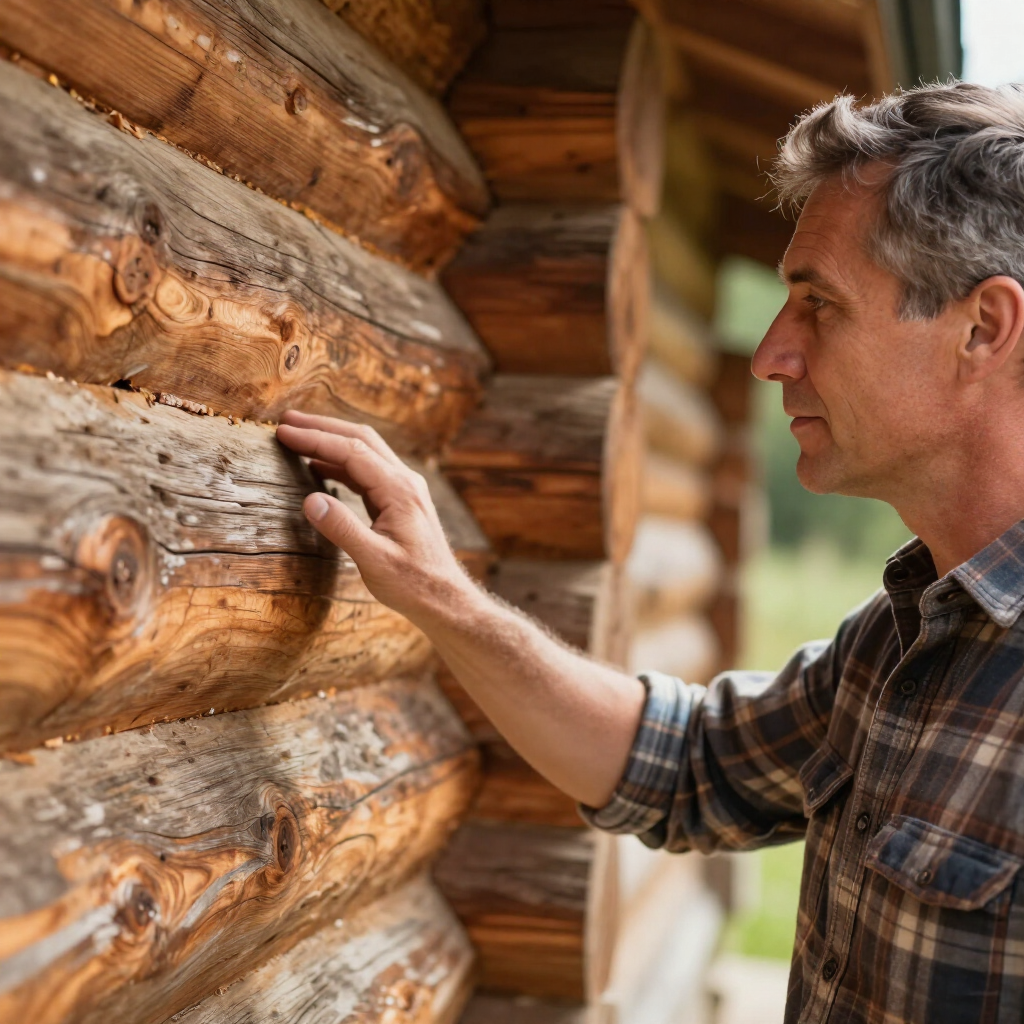
Log rot repair starts with a screwdriver, not a saw. Press the tip into a suspect log. If it sinks in with little resistance, the wood has gone soft and you have rot. If it stops at the surface, you may be looking at weathering or old stain, which is a much cheaper problem. That one test tells you more about the condition of your cabin than any amount of squinting from the driveway.
Here is what to look for, why logs rot, and how a crew decides if a damaged log gets patched or pulled.
Signs of Log Rot You Can Spot Yourself
Rot rarely announces itself. It hides behind a coat of stain and shows up as small clues that are easy to explain away.
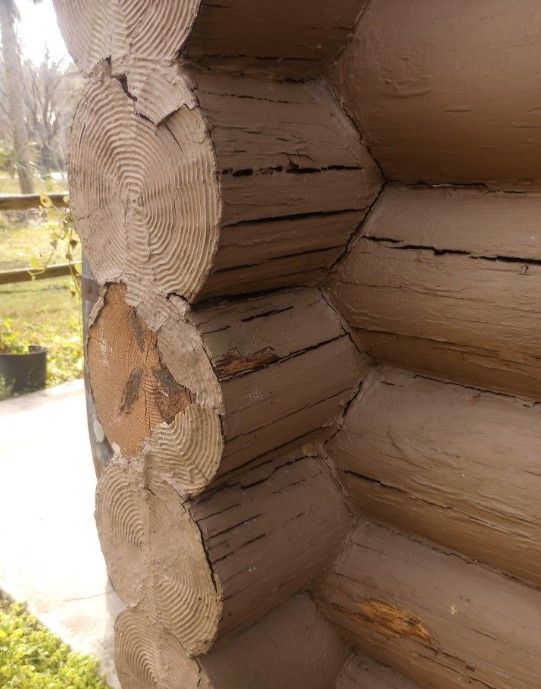
Soft spots are the earliest sign. Walk the exterior and press on the logs every few feet, paying attention to the bottom three courses and anywhere water runs. Wood that gives under your thumb or a screwdriver has lost its structure.
Dark staining and discoloration come next. A log that looks darker than its neighbors, especially in a streak below a window, a corner, or a deck ledger, is holding moisture.
Cracked or peeling finish over one area is often a symptom, not the disease. The finish fails because the wood underneath is wet and moving.
Fungus and mushrooms growing from a log or a check are a sure sign the wood is wet enough to support them.
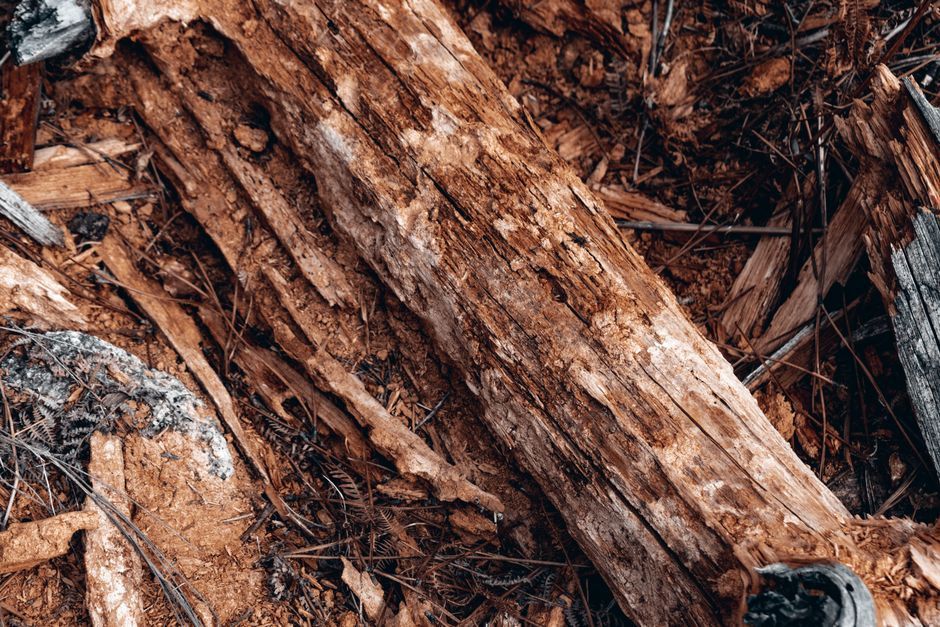
Insect activity , including carpenter bee holes, small piles of sawdust, or ant trails, points to wood that is already soft. Bugs prefer easy chewing.
A hollow sound when you tap a log with a mallet means the inside has decayed even if the outside looks fine.
Timber Tip: Check your cabin twice a year, once in spring after the snow melts and once in fall before it returns. Bring a screwdriver, a flashlight, and a notepad. Mark every soft spot so you can tell a contractor exactly where to look.
What Causes Log Rot
There is an old saying that water always finds a way. On a log home, it finds a way through four doors.
Water That Stays
Rain itself does not rot a log. Rain that cannot dry does. The fungi that break down wood need sustained moisture, generally above 20 percent moisture content for weeks at a time. Any spot where water sits, splashes, or wicks will rot before anything else.
Short Roof Overhangs and Bad Drainage
Overhangs are the cabin's umbrella. When they are too short, rain runs down the wall face. When gutters are missing or clogged, water sheets off the roof edge and splashes back onto the lowest logs. Grade that slopes toward the foundation keeps the bottom courses damp all season.
Failed Sealant and Open Checks
Logs crack as they dry, and those checks face the sky on the upper curve of each log. An open upward-facing check is a funnel. Add a failed caulk or chink line at a corner or around a window and water gets behind the finish, where it cannot evaporate.
The Wrong Finish
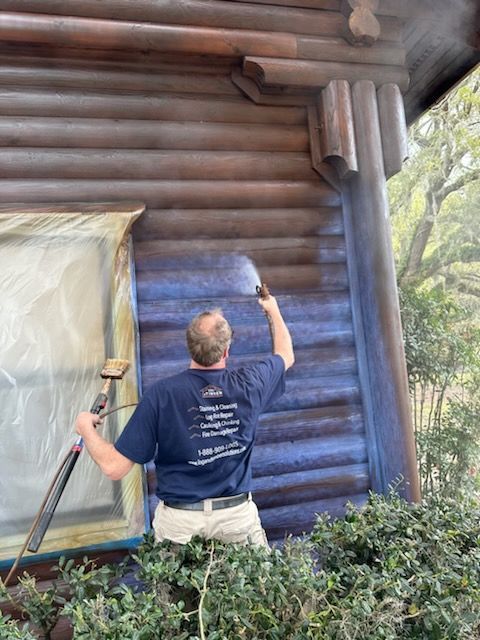
Paint and solid-color stains look tidy and trap moisture. They seal water in rather than letting the log breathe, and they hide the discoloration that would otherwise tip you off.
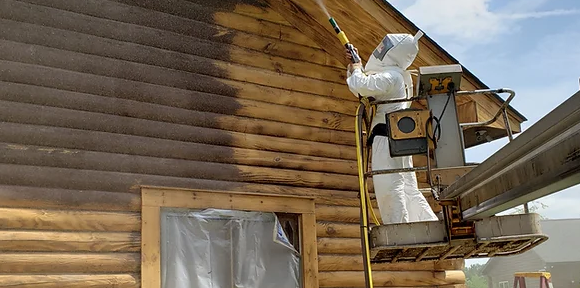
From the Crew: Over 95 percent of the rot we find is hiding under an opaque coating like paint or a solid-color stain. If your cabin is wearing one, plan on removing an opaque finish like that. You cannot inspect a log you cannot see.
Wood-to-Ground and Wood-to-Deck Contact
A log that touches soil, mulch, or a concrete pad wicks moisture constantly. Decks and porches attached without flashing do the same thing through the ledger board.
Log Home Fact: South- and west-facing walls take the most sun and UV damage, which breaks down the finish faster. North-facing walls stay shaded and dry slowly. Rot can show up on either side, but the cause tends to differ: finish failure on the sunny side, slow drying on the shady side.
Repair or Replace? How the Call Gets Made
Not every rotten log needs to come out. The decision comes down to how far the damage goes and where the log sits.
Surface rot , less than an inch or two into the face of a log that is otherwise sound, can most often be repaired in place. The soft wood is removed down to solid fiber, the cavity is treated with a borate preservative to kill the fungus, and the void is filled with a two-part epoxy wood consolidant and filler. Once cured, the patch is shaped, sanded, and stained to match. Done well, you will not find it.
Partial replacement handles rot that goes deeper but leaves the back of the log intact. The crew cuts out the damaged face, sometimes half the log's thickness, and lets in a new piece of matching wood, called a Dutchman or a half-log. The new piece is sealed, fastened, and blended to the neighbors.
Full log replacement is for logs that are rotten most of the way through, logs that carry weight at a corner or under a window, or logs with rot that keeps returning after repair. The wall above is supported, the log is cut free, and a new log is fitted, notched at the corners, and sealed. On a well-built cabin this is routine work for a crew that does it often.
Timber Tip: Ask any contractor to show you the moisture reading before and after repair. If the wood around the patch is still wet, the fix will not last. Good crews fix the water source before they touch the log.
What Happens After the Logs Are Sound
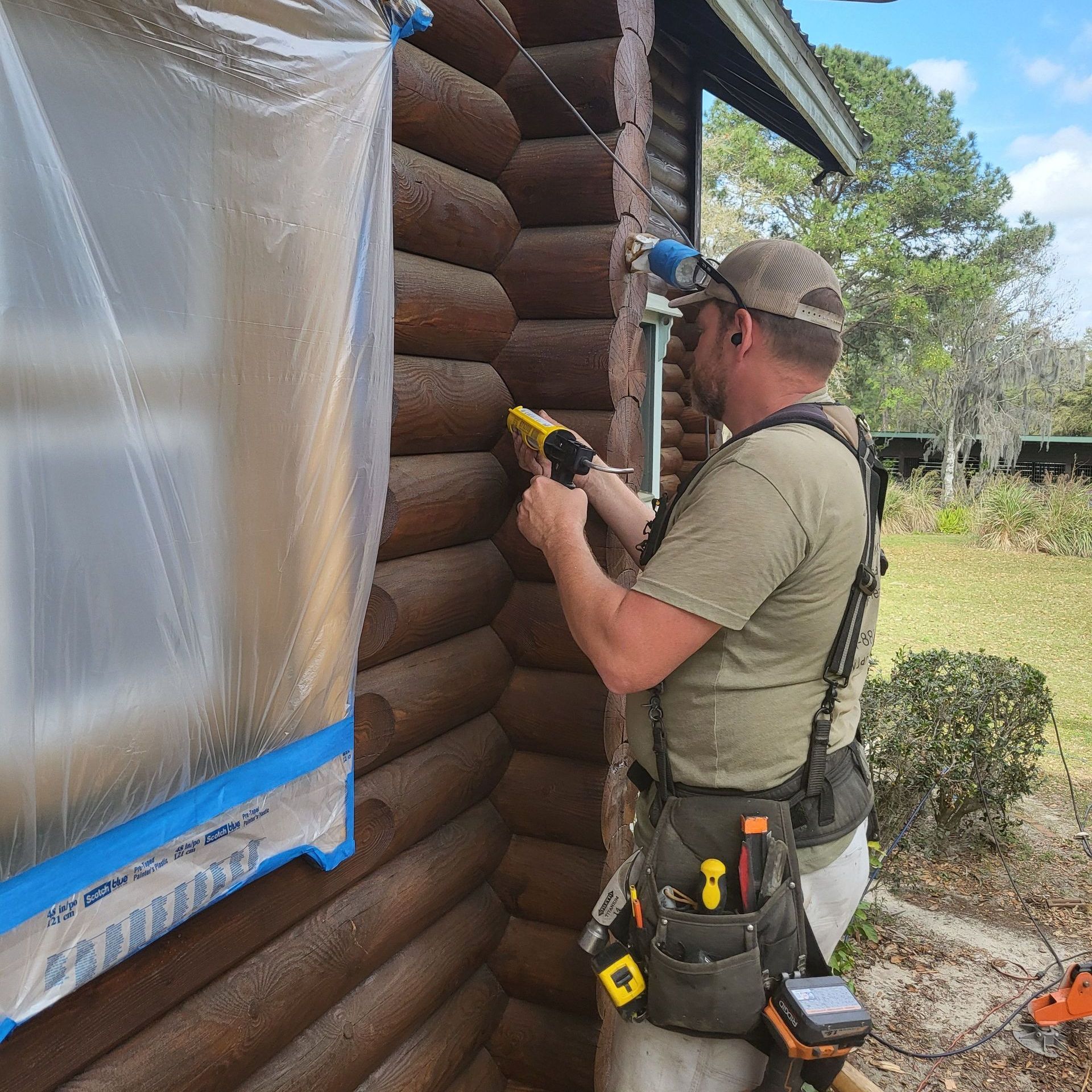
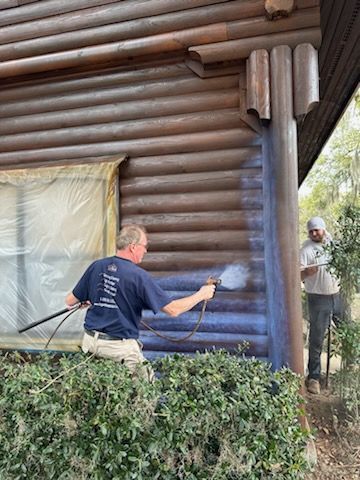
Repairing rot without fixing what caused it is like bailing a boat without plugging the hole. Once the logs are solid, the water has to be sent somewhere else. That means some combination of extending gutters and downspouts, adding or repairing flashing at decks and windows, re-sealing checks that face up, redoing chinking or caulk lines, and replacing an opaque finish with a breathable stain that lets you see the wood.
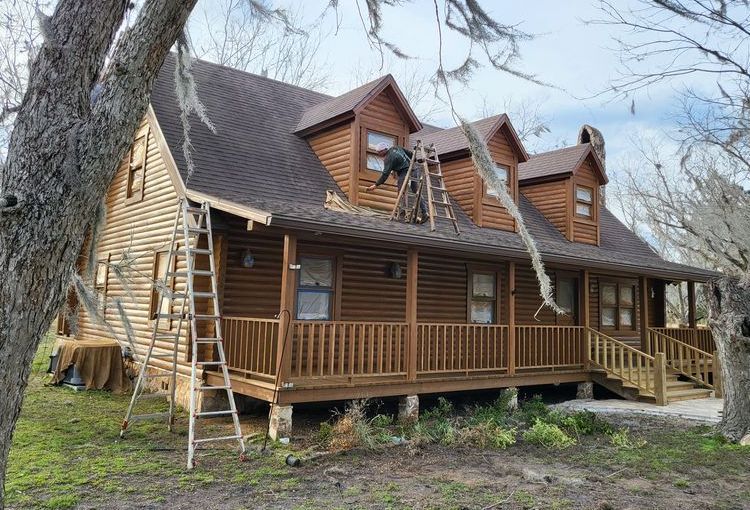
This is where a specialist earns the call over a general handyman. Log & Timber Solutions, for example, starts every job with a free inspection that walks the whole exterior before anyone talks about price, and as a Perma-Chink preferred applicator the same crew that replaces a log applies the sealants and stain systems that keep water out of the next one. After nearly 50 years working on log homes, the crew has a good sense of which soft spot is a patch and which one is a replacement before the first cut.
Log Home Fact: Borate wood preservatives work by making the wood toxic to fungi and insects without being harmful to people or pets once cured. They are applied to bare wood and soak in, which is one more reason bare, clean logs are the starting point for lasting repair.
The Short Version
Walk your cabin with a screwdriver twice a year. Pay attention to the bottom courses, corners, and anywhere water runs or splashes. If you find soft wood, get a professional set of eyes on it before the next wet season. Caught early, log rot repair is a few patches and a weekend. Caught late, it is a structural job. The difference is almost always how long the water had to work.
Frequently Asked Questions
What is the best time of year for log rot repair?
Late spring through early fall, when logs are dry and temperatures stay above the cure range for epoxy fillers and stain. Repairs made on wet wood or in freezing weather do not bond well. If you find rot in winter, mark it and keep water away from it, then schedule the work for warmer weather.
Can I repair log rot myself?
Small surface patches are within reach for a handy owner: dig out the soft wood, treat with borate, fill with a log-rated epoxy, and stain. The risk is misjudging the depth. Rot that looks shallow often runs deeper than the patch, and a filled log that is still wet inside will fail again. Anything near a corner, under a window, or on a bottom course is worth a professional inspection first.