How Much Does It Cost to Stain a Log Home?
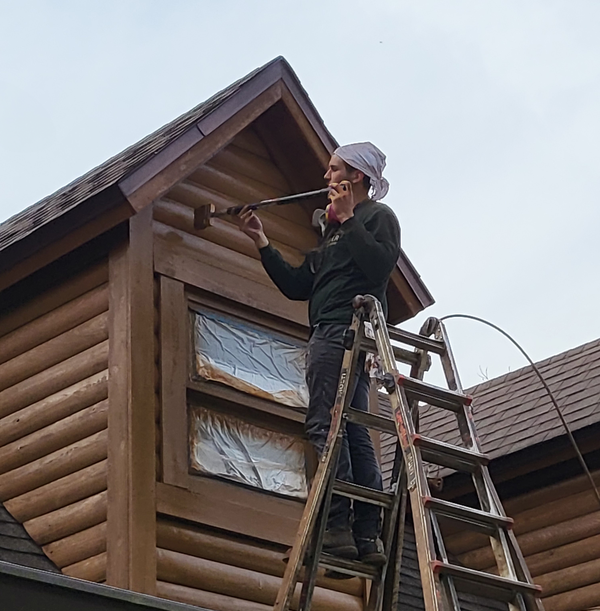
Ask three contractors what it costs to stain a log home and you might hear three thousand dollars, thirty thousand dollars, and everything in between. All three could be right. The cost to stain a log home depends far less on the stain in the bucket than on what your logs need before any of it goes on. Most homeowners pay somewhere between $2 and $5 per square foot of wall surface for cleaning and staining, and $8 to $20 or more per square foot when the old finish has to be stripped off first.
Here is where those numbers come from, what pushes them up or down, and the one habit that keeps them low for the life of your cabin.
Log Home Staining Cost: The Ballpark Ranges
Think of log cabin staining projects in three tiers:
A maintenance coat on a healthy finish usually runs about $1.50 to $4.50 per square foot of wall. The existing stain is sound, so the job is a wash, light prep, and a fresh coat.
A wash-and-stain job runs about $2 to $5 per square foot. The finish is fading but not failing, so the crew cleans the logs, treats any mildew, and applies new coats over a stable base.
A full restoration runs about $8 to $20 or more per square foot. The old finish is peeling, blistering, or was the wrong product to begin with, so it all comes off before repairs, preservative, stain, and sealant go back on.
On a typical cabin, that means a maintenance recoat might cost a few thousand dollars while a full strip-and-stain restoration can reach $15,000 to $40,000 or beyond. These are national planning ranges, not quotes. Your logs, your climate, and your home's layout all move the number, which is why a contractor worth hiring will want to walk the property before naming a price.
Log Home Fact: A gallon of log home stain covers roughly 200 to 400 square feet per coat depending on how thirsty the wood is. Freshly stripped logs drink the most, which is one reason restorations use far more product than recoats.
Wall Square Footage Is Not Floor Plan Square Footage
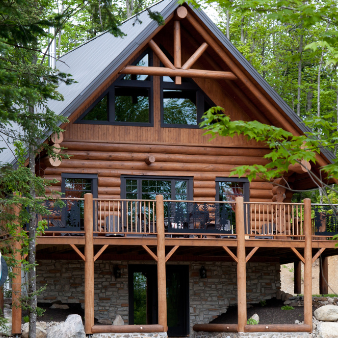
When a homeowner says their cabin is 2,000 square feet, they usually mean living space. Staining is priced on exterior wall surface, and those are very different numbers. Once you count gable ends, dormers, and a great room wall that runs two stories, a 2,000 square foot cabin can carry 2,500 to 4,000 square feet of stainable wall.
Log Home Fact: The curved face of a round log has more surface area than a flat wall of the same height, so log walls absorb more stain per square foot of elevation than sided walls do. That is part of why log home quotes look different from house painting quotes.
Keep this in mind when comparing bids. Two quotes that look far apart are sometimes measuring different things.
What Drives the Cost to Stain a Log Home
The condition of your current finish
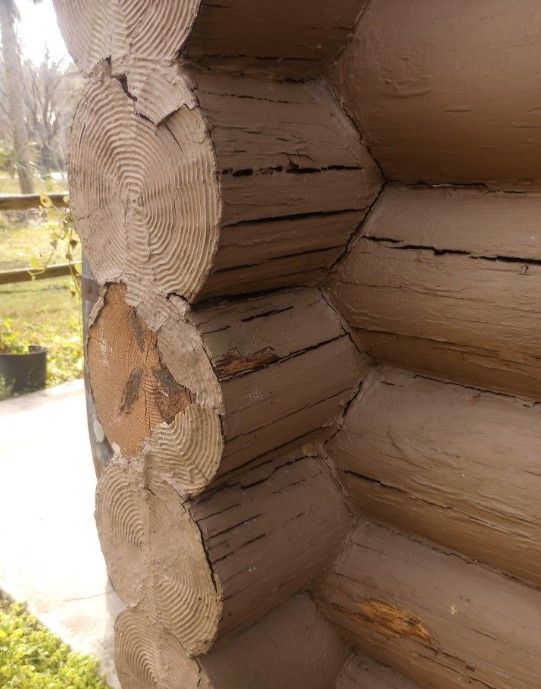
This is the single biggest variable. A finish that is intact and breathable can be recoated. A finish that is peeling, flaking, or gone gray from UV damage has to come off, and stripping is where budgets grow. The difference between catching a finish at fading versus failed can be tens of thousands of dollars.
From the Crew: Over 95% of the log rot we find is hiding under an opaque coating like paint or a solid-color stain. These products trap moisture and hide the condition of the wood until the damage is serious. If your cabin is wearing one, plan on removing it rather than recoating over it.
Prep work: wash or blast
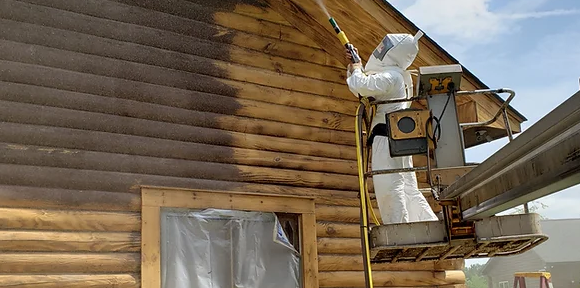
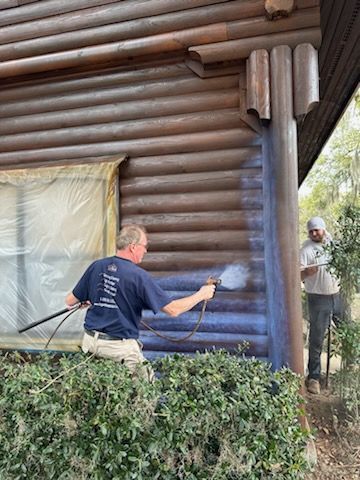
Sound finishes get a thorough cleaning. Failed finishes get media blasting, where crushed glass or another soft abrasive strips the logs back to bare, healthy wood. Blasting is the biggest single line item on a restoration, but it is also what makes the new stain last. Stain bonds to wood, not to old finish.
Height, access, and layout
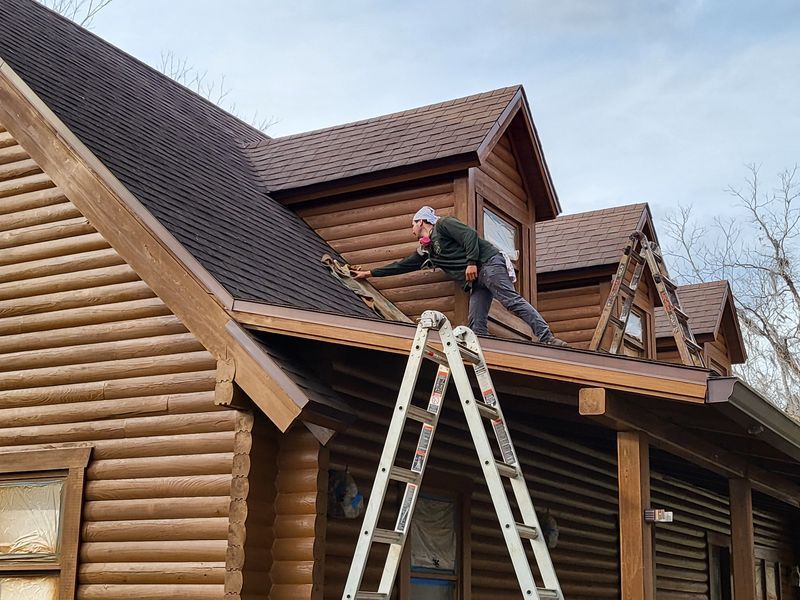
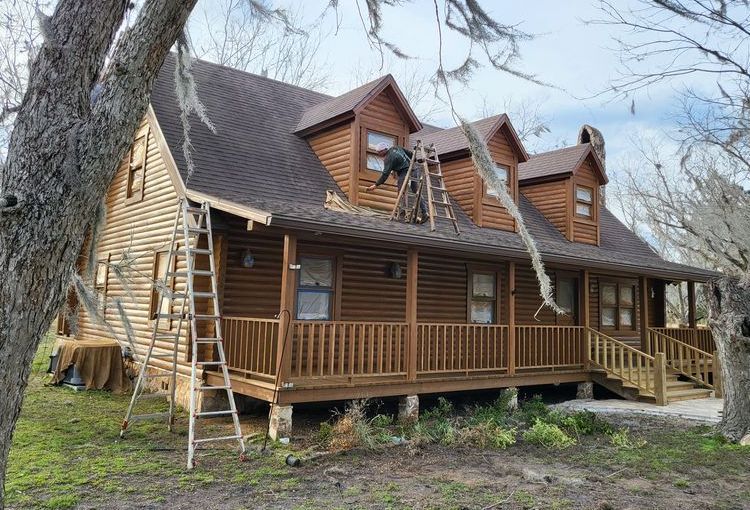
A single-story cabin on flat ground stains faster than a three-story home on a walkout basement with tall gables and wraparound decks. Anything that requires scaffolding, lifts, or careful masking adds labor hours, and labor is most of the bill.
Repairs found along the way
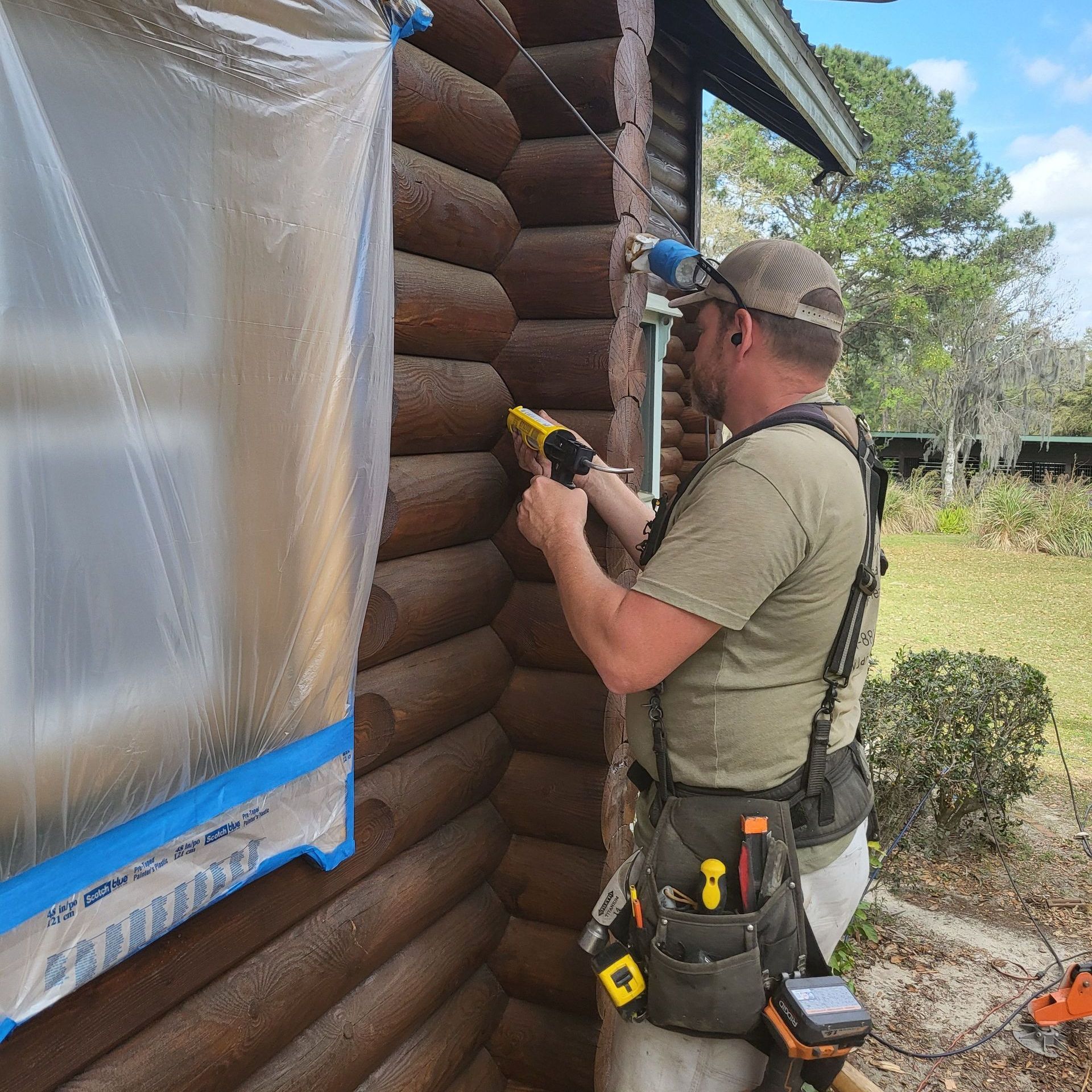
Once the logs are clean and bare, problems show themselves. Failed caulk lines, open checks, and soft spots from log rot are all cheaper to fix while the crew is already on site than to seal under a fresh coat of stain and discover later.
The stain system itself
Professional-grade log home stains cost more per gallon than hardware store products, and they earn it. Quality systems typically go on in two coats with a clear topcoat on vertical surfaces, and they hold up for years instead of seasons.
Timber Tip: When bids come in far apart, ask each contractor what stain system they are using and how many coats are included. The number of coats and the product line explain most of the gap between quotes, and the cheapest bid often becomes the most expensive finish once you count how soon it needs redoing.
Can You Stain a Log Cabin Yourself?
You can, and for a small cabin in good shape, some owners do. Be honest about the math first. Stain alone for an average log home often runs $1,500 to $3,000 in materials, before renting a sprayer or pressure washer and before a week or more of your own time on ladders.
The money is the smaller risk. The prep is the bigger one. Stain applied over damp or poorly prepped wood fails early, and when it fails, the fix is paying a professional to strip off your own work before starting over. That is the expensive way to learn why prep matters.
Timber Tip: Wood needs to be clean and dry before any stain goes on. Professionals check with a moisture meter and will not stain logs above roughly 19% moisture content. If you are doing this yourself, buy the meter. It is the cheapest insurance in the whole project.
The Cheapest Stain Job Is the One You Never Let Get Bad
There is an old saying that fits log homes perfectly: an ounce of prevention is worth a pound of cure. In staining terms, a wash and maintenance coat every few years costs a fraction of a full restoration every fifteen. Homeowners who stay on a schedule almost never face the $30,000 surprise, because their finish never reaches the point where blasting is the only option.
This is where a log home specialist earns their keep. Log & Timber Solutions, for example, starts every project with a free inspection, and as a Perma-Chink preferred applicator, the same crew that evaluates your finish applies stain systems it can stand behind for the long haul. A specialist knows the difference between a finish that needs a maintenance coat and one that needs to come off, and that judgment call is worth more than any line on the estimate.
Walk your cabin once a year, watch the south- and west-facing walls where the sun hits hardest, and get a professional set of eyes on the finish before it fails. Your logs, and your budget, will thank you.
Frequently Asked Questions
What is the best way to lower the cost to stain a log home?
Stay ahead of the finish instead of behind it. A maintenance coat applied while the existing stain is still sound skips the most expensive step, which is stripping. Beyond that, bundle work: if caulk lines or small repairs are due, having them handled while the staining crew is already on site costs less than a separate service call later. And keep the finish breathable and semi-transparent so problems stay visible instead of hiding under an opaque coating.
How often does a log home need to be stained?
It depends on the product, the color, and how much sun and weather each wall takes. As a general rule, plan on a maintenance coat every three to five years, with south- and west-facing walls fading first. An annual walk-around tells you more than any calendar. If water stops beading on the surface or the color looks noticeably lighter in exposed spots, the finish is asking for attention.