Log Cabin Media Blasting: How It Works and Why It's the Best Prep for a New Stain
There's an old saying that applies to almost every trade: well begun is half done. Nowhere is that more true than staining a log home. The stain itself matters, but the surface underneath it matters more. If you apply a premium log home stain over failed finish, gray UV-damaged wood, or mill glaze, you'll be redoing the whole job in two or three years instead of enjoying it for eight to ten.
That's where log cabin media blasting comes in. If your cabin's finish is peeling, flaking, or turning that dull silver-gray, blasting is the fastest and cleanest way to take the logs back to bare, healthy wood so a new stain can actually bond.
What Is Media Blasting, Exactly?
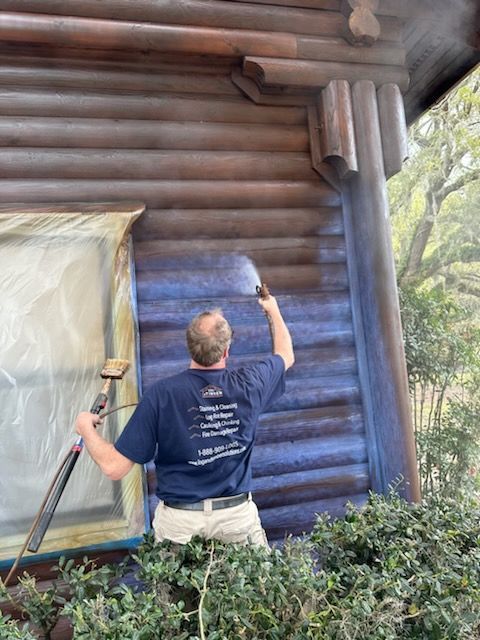
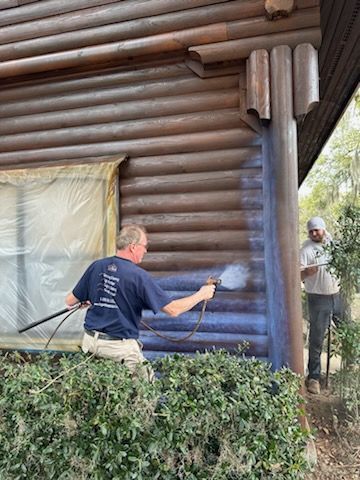
Media blasting uses compressed air to propel a soft abrasive against the log surface. Instead of sand (which is too aggressive for wood), log home professionals use gentler media like crushed glass, glass bead, corn cob, or walnut shell. The media strips away old stain, paint, and the top layer of dead, sun-damaged wood fibers without gouging the healthy wood underneath.
Think of it like exfoliating the logs. When the blasting is done, you're looking at fresh wood grain that hasn't seen daylight since the cabin was built.
Timber Tip: Not all media is right for every job. Softer media like corn cob works well on delicate profiles and interior work, while crushed glass cuts through thick, stubborn coatings faster. A pro will match the media and pressure to your logs, not run one setting on everything.
Why Not Just Pressure Wash or Sand?
Both have their place, and honestly, sometimes a good wash is all a cabin needs. But when the goal is full stain removal, each alternative has a real drawback.
Pressure washing relies on water, and lots of it. High pressure can drive moisture deep into checks and joints, and soaked logs can take a week or more to dry before they're ready for stain. Push the pressure too high and you'll fur up the wood grain. It's a great cleaning method, but it's a slow, risky stripping method.
Hand sanding gives you excellent control, but on a full cabin it's brutally slow. Sanding an entire log home can take weeks, and curved log profiles, corners, and checks are hard to reach with a sander.
Chemical strippers work, but they add cost, cleanup, and runoff concerns, and they still usually require a heavy rinse afterward.
Media blasting avoids the water problem entirely. The logs stay dry, which means in many cases blasting and staining can happen in the same project window instead of waiting on the wood to dry out.
Log Home Fact: Bare wood exposed to direct sun starts degrading in as little as two to four weeks. Once logs are blasted, the clock is ticking to get stain on them, which is why blasting and staining should always be scheduled as one project.
Signs Your Cabin Needs Blasting Before Its Next Stain
Not every restain requires blasting. Here's when it does:
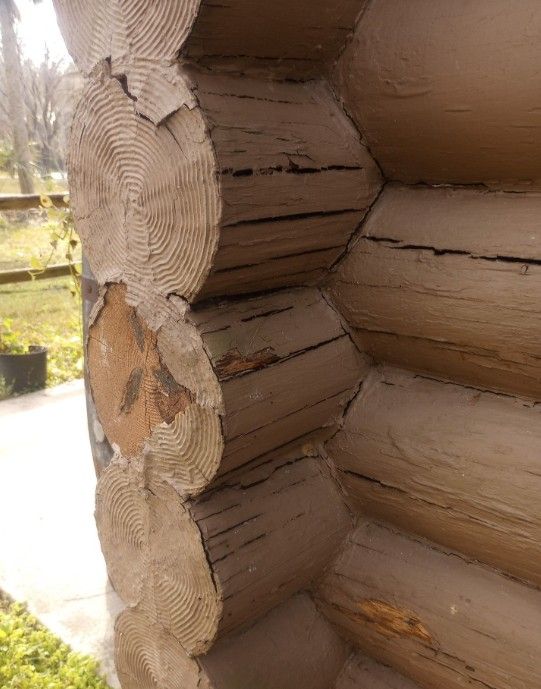
- The old finish is failing. Peeling, flaking, or blistering stain can't be coated over. New stain is only as strong as what it's sitting on.
- You're switching stain systems. Many stains are incompatible with each other. Going from an oil-based product to a modern water-based system usually means removing the old finish completely.
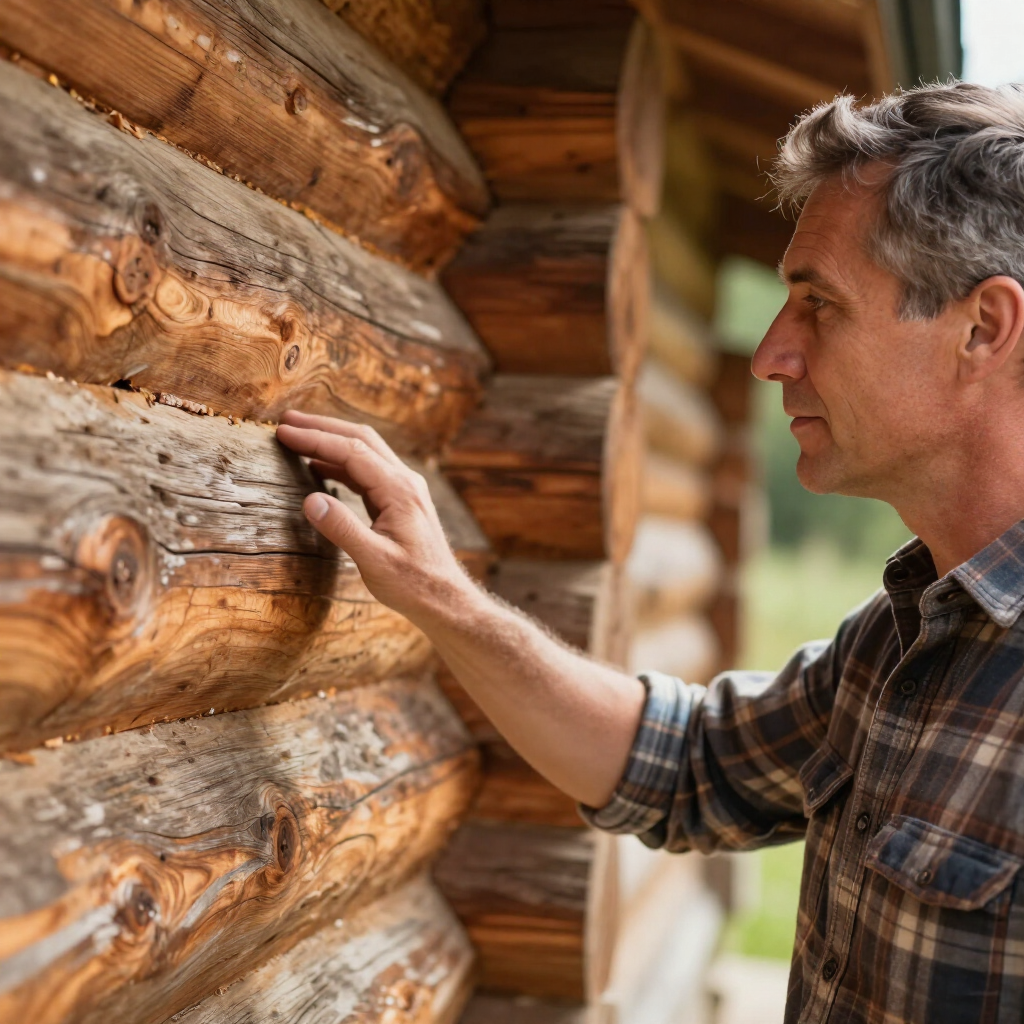
- The logs have gone gray. That silver color is UV-damaged wood fiber. Stain applied over it will look muddy and fail early because it's bonding to dead fibers.
- There's paint or an unknown coating on the logs. If you don't know what's on the wood, the safest path is to take it all off.
If your finish is intact and simply fading,
a wash and maintenance coat may be all you need. A free inspection will tell you which situation you're in.
Timber Tip: Run your hand over a south- or west-facing wall. Those walls take the most sun, so they fail first. If the finish there feels chalky or the wood looks gray under the surface, the rest of the cabin isn't far behind.
What Happens After the Blast: Staining Done Right
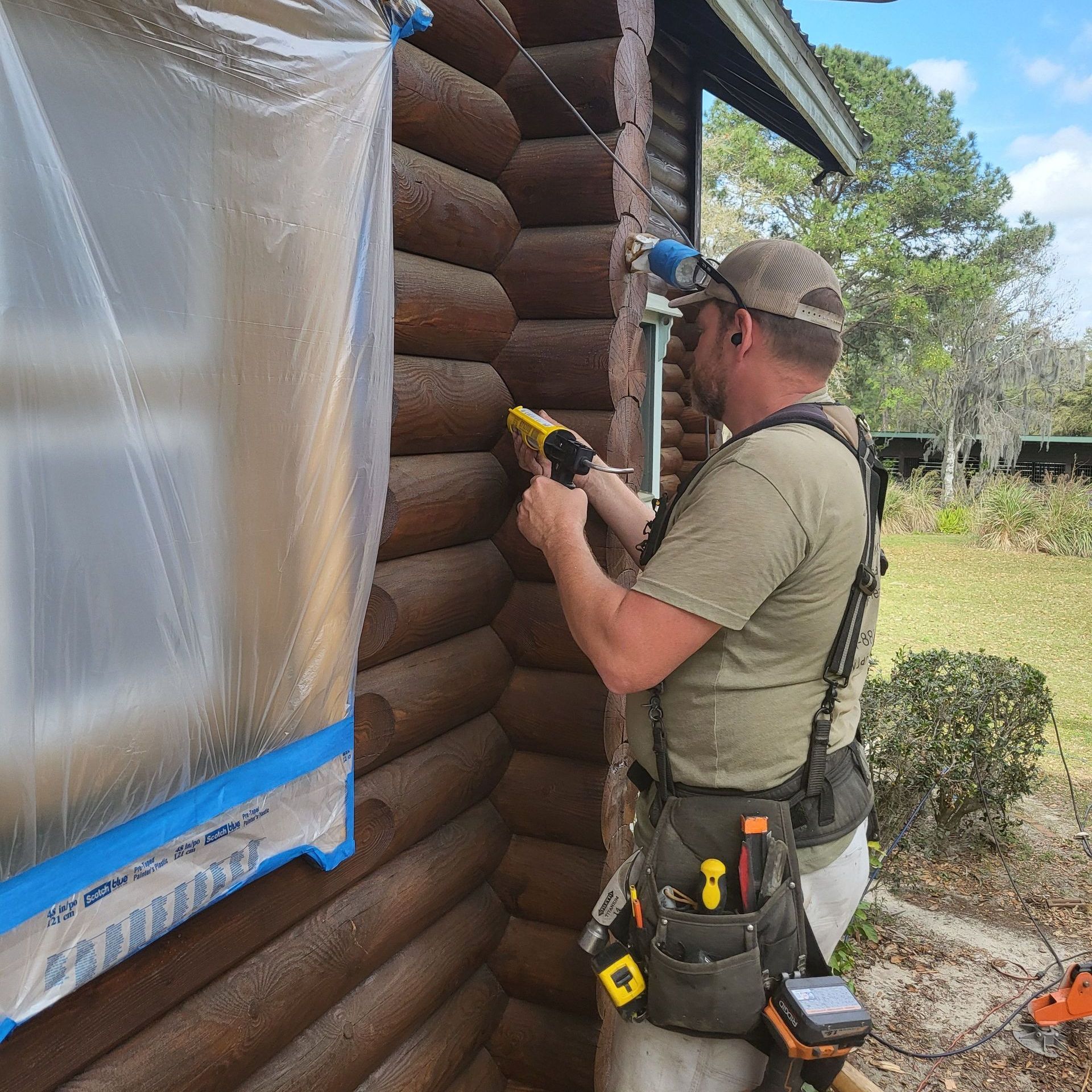
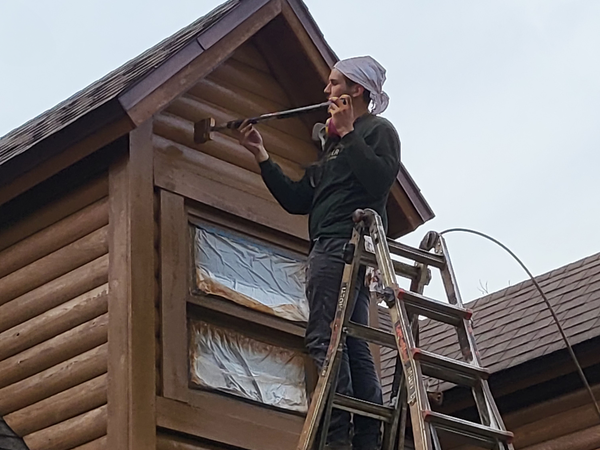
Blasting is step one of a two-step process. Once the logs are bare, the surface gets cleaned of dust and any remaining fuzz (often with a light buffing or an osborn brush), checks and gaps get addressed, and then the new stain goes on while the wood is clean and dry.
This is where the payoff shows up. Stain applied to properly prepped bare wood penetrates deeper, bonds harder, and holds its color dramatically longer than stain applied over a marginal surface. You also get first pick of color, since bare wood takes stain evenly, and this is the ideal time to add a borate treatment to protect against insects and rot before the stain seals the logs.
Log & Timber Solutions handles blasting and
log cabin staining as a single restoration process, and as a Perma-Chink preferred applicator, the crew that strips your logs is the same crew that protects them. With more than 50 years in log home care and over 6 million square feet of logs restored, they've seen just about every failed finish there is.
Log Home Fact: A quality stain system on well-prepped logs typically needs only a maintenance coat every few years, not a full restrip. Blasting done right is often the last time your cabin ever needs it.
Is Media Blasting Safe for My Logs?
In experienced hands, yes. The media used on log homes is far softer than sand, and pressure is dialed to remove coating, not wood. An experienced operator keeps the nozzle moving at the correct distance and angle so the log profile stays smooth and consistent.
The risk comes with inexperience. Too much pressure, the wrong media, or a nozzle held in one spot too long can dish out soft grain and leave a wavy surface. This is one of those jobs where the equipment is only half the story. The operator is the other half.
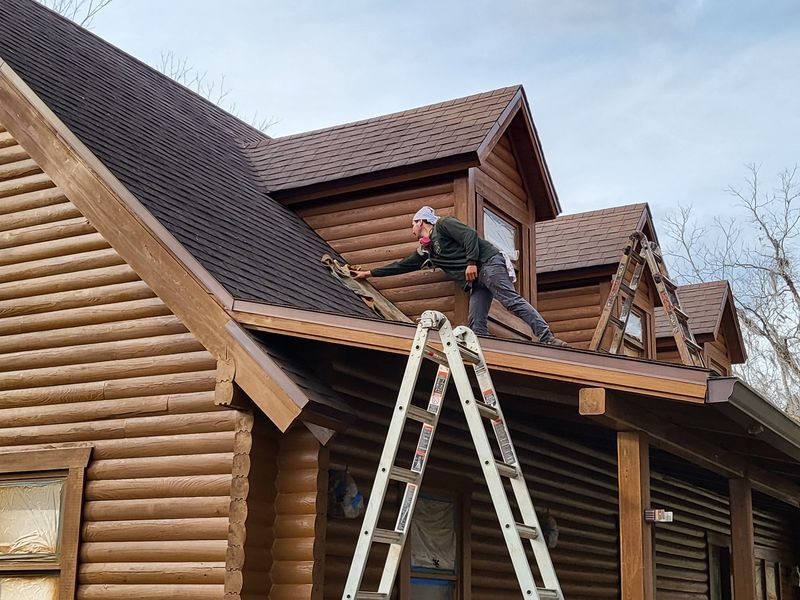
From the Crew: Cleanup matters as much as the blast. Spent media and old finish debris get contained and hauled off, and landscaping, windows, and roofing are masked before the first log is touched. If a contractor doesn't mention containment, keep looking.
Ready to Take Your Logs Back to Beautiful?
If your cabin's finish is past the point of a simple wash and recoat, media blasting is the reset button. Bare wood, fresh stain, and a protection system that starts from zero.
Log & Timber Solutions offers free inspections across the East Coast, with crews based in North Carolina, Georgia, and Pennsylvania. Call (828) 585-7472 or
request a free estimate online, and we'll tell you honestly whether your cabin needs a blast or just a bath.
FAQs
What is the best log cabin media blasting method for removing old stain? It depends on the coating and the wood. Crushed glass is the workhorse for removing thick or multi-layer finishes, while corn cob and walnut shell are gentler options suited to lighter coatings, interior surfaces, and softer wood species. The best results come from matching media type, grit, and air pressure to your specific logs, which is why an on-site inspection matters before any blasting starts.
How soon after media blasting should a log home be stained? As soon as possible, ideally within days. Freshly blasted wood is unprotected, and UV exposure begins breaking down bare wood fibers within a few weeks. Weather permitting, a professional crew will blast, buff, treat, and stain in one continuous project so the logs are never left exposed.