Chinking vs. Caulking: Which Does Your Log Home Need?
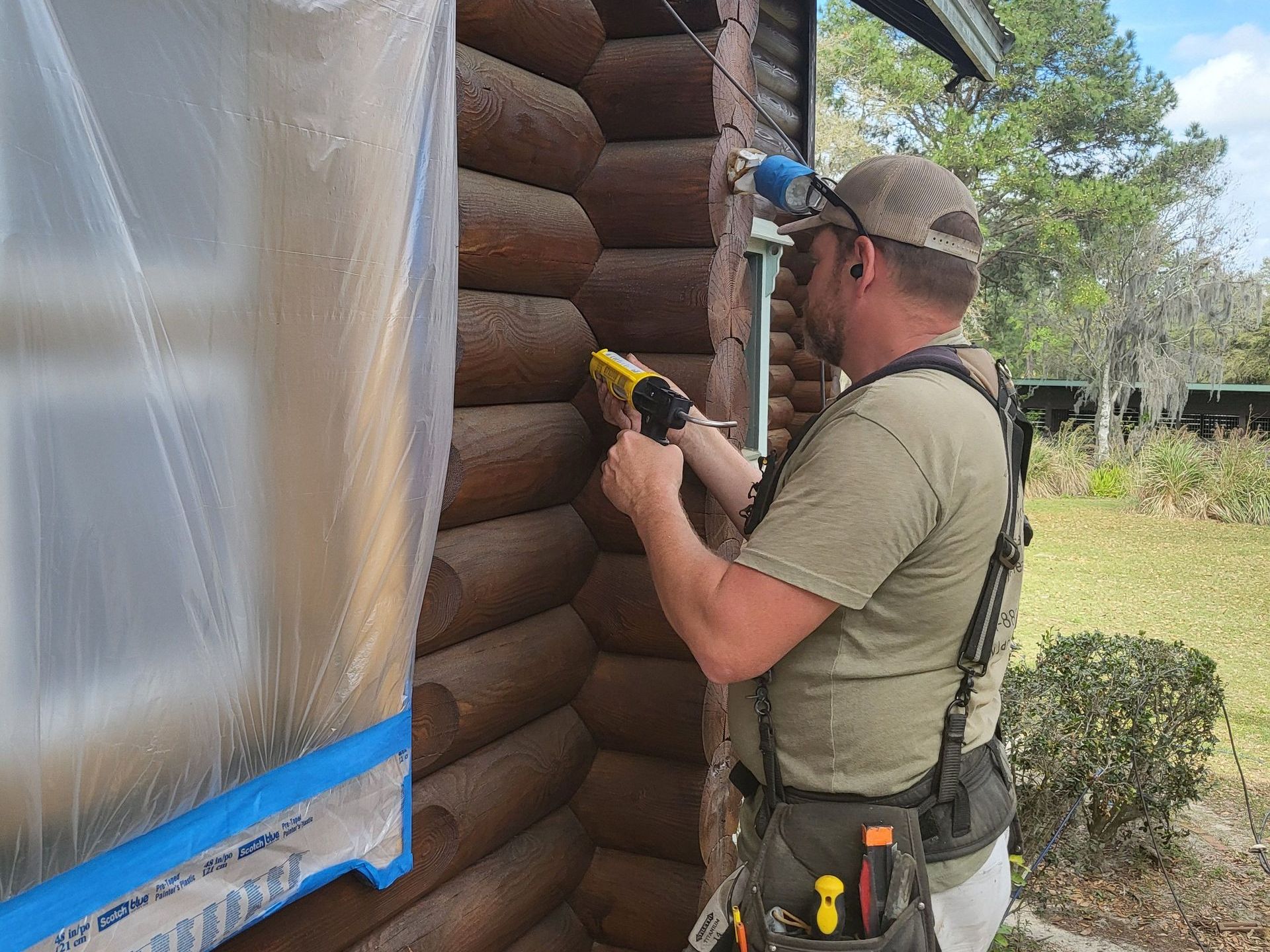
There's an old saying that fits log home ownership perfectly: a stitch in time saves nine. Seal a small gap today and you avoid a rotted log tomorrow. But when it comes to chinking vs. caulking, plenty of log home owners aren't sure which "stitch" their home actually needs. The two get used interchangeably in conversation, and they do solve the same basic problem, keeping water, air, and insects out of the joints in your home. The materials, the gap sizes they cover, and the way they're applied are different, though, and using the wrong one in the wrong place can cause more damage than leaving the gap alone.
Here's how to tell them apart and figure out what your home needs.
What Is Caulking on a Log Home?
Caulk handles the small stuff. It's designed for gaps and joints less than 3/4 of an inch wide, which covers most of the sealing work on a modern log home: the joints around windows and door trim, corners, small horizontal seams between logs, and checks (the natural cracks that open up in logs as they dry).
Log home caulk is a different animal from the tube you'd grab at a hardware store for your bathtub. Caulks made specifically for logs can stretch up to 500 percent, and they need every bit of that. Logs expand during the warmth of the day and contract as they cool at night, so the caulk sealing those joints has to move with the wood year after year without cracking or pulling away.
Timber Tip: A quality caulk job starts with what you don't see. Installing backer rod, a closed-cell foam dowel placed behind the caulk, gives the bead the right depth and support so it can flex properly and last far longer than caulk squeezed straight into a gap.
What Is Chinking?
Chinking is for the wide gaps, typically 2 to 6 inches between logs. If you picture a classic cabin with bold white or gray bands running between dark logs, you're picturing chinking.
Log Home Fact: People have been chinking cabins for centuries with whatever was on hand, from moss and clay to horsehair and mortar. Many older historic homes still carry their original mortar chinking today.
Modern chinking is usually an acrylic product such as Perma-Chink or Sashco's Log Jam. These materials look like traditional mortar because they contain aggregates, but they behave more like a heavy-duty caulk, flexing as the logs move instead of cracking the way rigid mortar can.
Proper application matters just as much as the product. Acrylic chinking needs a bond break behind it, a layer that lets the chinking grip the top and bottom log surfaces while sliding freely along the back as the logs expand and contract. Grip strips, backer rod, sill seal, and closed-cell foam all work for this. Chinking can also be finished in a flat or tapered profile depending on how the joint needs to shed water.
Chinking vs. Caulking: How to Tell Which One You Need
The short answer comes down to gap width and the style of your home.
If your home was built chink-style, with intentional gaps between the logs, those wide joints need chinking. If your home was built with tight, stacked logs (sometimes called chinkless construction), caulking handles the joints, corners, and trim. And many homes need both: chinking between the logs and caulking around the windows, doors, and checks.
Log Home Fact: In our experience, about 90 percent of air and moisture intrusion happens around window and door trim, followed by corners, and lastly the horizontal joints between logs. If you're feeling drafts, the trim is the first place to look.
This is where an experienced eye pays off. Log & Timber Solutions, a Perma-Chink preferred applicator, inspects each home before recommending anything, because the right call depends on the gap width, the log profile, the existing sealant, and how the joint sheds water. Matching the material to the joint is what makes the seal last.
A Word About Checks: When Not to Caulk
Checks are the long cracks that open along a log as it dries, and knowing which ones to fill is one of the most misunderstood parts of log home care.
A check should be filled when it's 3/8 of an inch or larger, or when it sits on the upper curve of a log where water will collect. The right fix is backer rod first, then caulk over it.
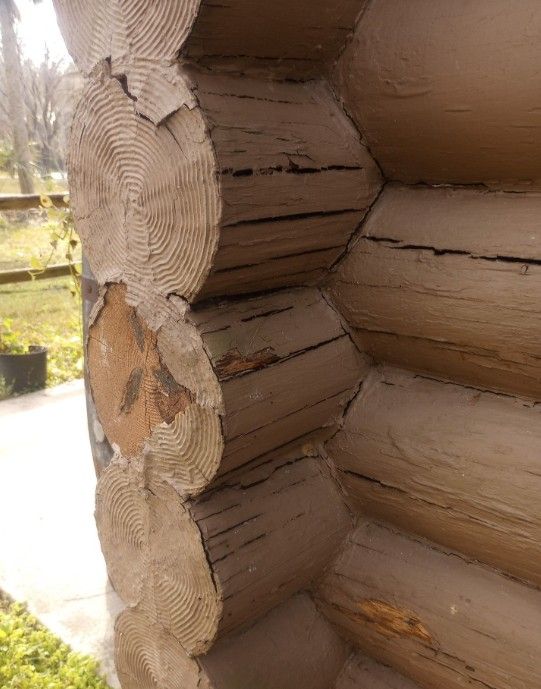
Smaller checks are usually better left alone. As the log expands and contracts, caulk in a tiny check gets pushed out of the crack and forms a lip. That lip funnels rainwater down into the check, traps it behind the caulk, and quietly feeds log rot, the exact problem you were trying to prevent.
From the Job Site: Some of the worst rot repairs our crews handle started as well-intentioned caulk jobs. A homeowner filled every hairline crack on the sunny side of the house, the caulk lipped out within a couple of seasons, and water sat trapped against bare wood for years. When in doubt, have a check evaluated before you fill it.
Signs Your Sealant Needs Attention
Whether your home is chinked, caulked, or both, the warning signs of a failing seal look similar. Watch for drafts near windows and corners, heating or cooling bills creeping up, daylight visible at a joint, insects finding their way inside, or sealant that has cracked, hardened, or pulled away from the wood. Carpenter bee holes are another common entry point that should be sealed before the next generation moves in.
Timber Tip: Walk your home's exterior once in spring and once in fall. Press a fingertip against a few beads of caulk or chinking. Healthy sealant feels flexible and stays bonded to the wood on both sides. Anything brittle, gapped, or loose goes on the repair list.
Sealing your log home isn't a once-and-done project, but it doesn't have to be a burden either. Regular inspections and small touch-ups cost a fraction of what rot repair or log replacement runs. If you're not sure whether your home needs chinking, caulking, or a little of both, a professional inspection will give you a straight answer and a plan.
FAQs
What is the best chinking vs. caulking approach for an older historic cabin?
For most historic homes, the best chinking vs. caulking decision is to replace failing mortar chinking with a modern acrylic chinking installed over a proper bond break. Acrylic products keep the traditional mortar look while flexing with the logs, so they won't crack out the way rigid mortar does. Caulking still handles the trim, corners, and any checks 3/8 of an inch or wider.
Can chinking and caulking be done in bad weather?
Rain doesn't have to stop the work. Caulking and chinking are among the tasks that can be performed appropriately in wet weather, along with log rot repairs and washing, so a rainy forecast rarely delays a sealing project. Extreme temperatures matter more than moisture, since sealants need the right conditions to cure and bond correctly.