What Log Home Owners Need to Know Before Filing a Fire or Storm Damage Claim

There's an old saying that fits log home ownership better than almost anything else: an ounce of prevention is worth a pound of cure. Nowhere is that more true than in the days after a fire or storm, when the choices you make, what you photograph, who you call, what you sign determine whether your log home fire damage insurance claim pays for a proper restoration or leaves you covering the gap yourself.
Log homes aren't like other houses, and unfortunately, most insurance claims get processed as if they were. Here's how to protect your home and your claim from day one.
Why Log Homes Are Different When Disaster Strikes
Standard adjuster estimates are built around stick-frame construction: drywall, studs, sheathing, siding. Log homes use different materials, different repair methods, and carry different costs. Here's a number that surprises most owners: roughly 80% of log home insurance claims involve the roof, not the logs. But when the logs are involved, an adjuster who has never scoped a log home may not know that a charred wall doesn't always mean a rebuilt wall, or that a "cosmetic" smoke stain can run deep into the wood grain.
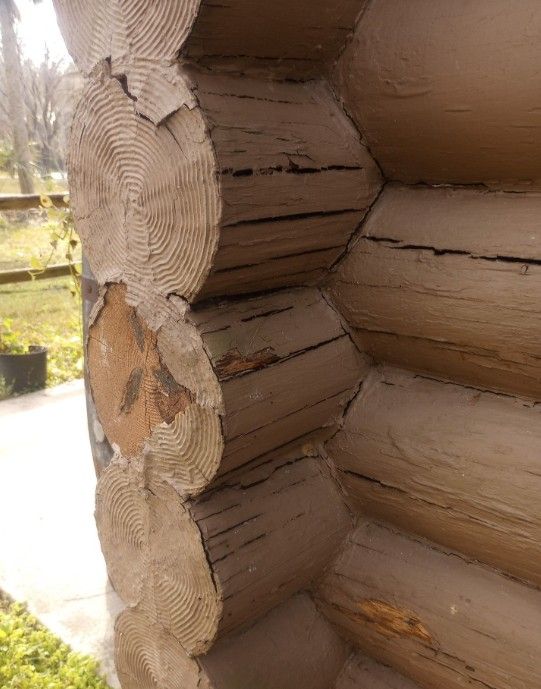
Logs also hide damage in ways framed walls don't. Moisture wicks into checks (the natural cracks that open as logs season). Smoke penetrates the grain itself. Chinking and sealant lines can be compromised without any visible gap. If none of that gets documented early, it's very hard to claim later.
That's the thesis of this whole article: your claim is only as strong as your documentation and your repair estimate.
Timber Tip: Photograph log checks and chinking lines up close, from multiple angles, in good light. Smoke and water damage hide there first and those close-ups are the photos adjusters rarely take themselves.
First 48 Hours: Protect Yourself and Your Claim
Make it safe and stop the bleeding
Your first job is preventing secondary damage. Tarp exposed roof sections, board up broken openings, and shut off water if lines were compromised. Insurers expect reasonable mitigation, if a hole in the roof lets three more rainstorms in before anyone tarps it, that added water damage can be disputed.
Document everything before you touch anything
Photos, video walkthroughs, dated notes, and a written list of damaged belongings. Shoot wide shots for context and close-ups for detail. Once cleanup starts, evidence disappears, so document first and clean second.
Read your policy before you call
A few things homeowners routinely overlook:
- Replacement cost vs. actual cash value. Replacement cost pays to restore; actual cash value deducts depreciation. Know which one you have.
- Additional living expenses (ALE). If the home is unlivable, your policy may cover lodging and meals. Track receipts from day one.
- Your deductible structure. Wind and hail deductibles often run 1% to 10% of your dwelling coverage rather than a flat amount, with the higher percentages common in Tier 1 hurricane counties. On a roof claim, that percentage is real money out of your pocket.
- Roof-specific requirements. Some policies require approved "signature roofers" for roof claims, worth knowing before you hire anyone, since roofs drive the majority of log home claims.
Log Home Fact: Wood is hygroscopic, it absorbs and releases moisture with its environment. That's why water intrusion in a log wall can keep causing damage for months after the storm passes, long after everything looks dry on the surface.
Filing Your Claim: A Realistic Walkthrough
Notify your insurer promptly. Then understand who you're working with: the adjuster works for the insurance company, not for you. Most adjusters are professionals trying to settle claims fairly, but their estimate reflects their training, and very few are trained on log construction.
Keep a claim journal from the first phone call: names, dates, adjuster visits, what was said, what was promised. Save every email. If a dispute comes up six weeks in, that journal is your best friend.
In most cases you're free to choose your own contractor, as long as they're reputable, check your policy for specifics. Here's the catch for log home owners: insurance company vendor-approval systems are built around general contracting, so true log specialists often don't appear on the "approved" lists at all. That means the burden falls on you to identify the right specialist and act as the liaison between your contractor and your adjuster. It's extra work at a stressful time, but it's the difference between a log-correct repair and a generic one.
One hard warning while you're hiring: if a contractor offers to "eat your deductible" or inflate the invoice to cover it, walk away. Waiving deductibles is illegal in many states, with penalties running up to six months in jail and a $10,000 fine.
Timber Tip: Ask your adjuster directly whether they've handled log home claims before. It's not rude — it's practical. If the answer is no, that's your cue to bring in outside expertise early rather than after the estimate comes back low.
Why an Independent Restoration Assessment Changes Everything
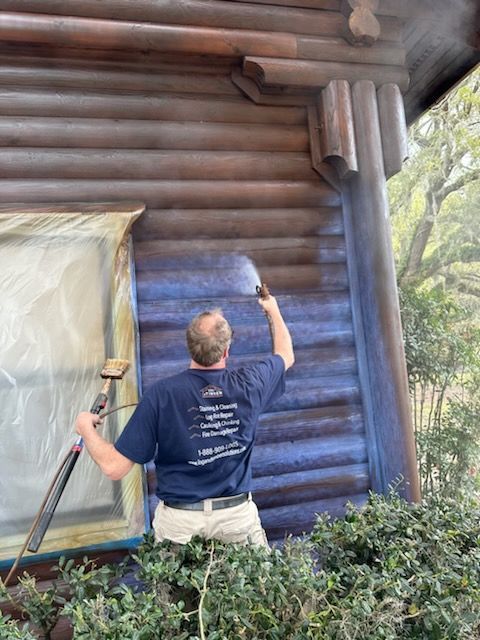
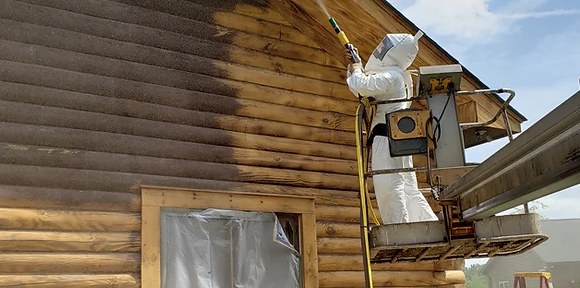
Here's where most log home claims go sideways: the gap between a generic adjuster estimate and what log restoration actually involves. Large milled logs, a 6×9, for example, char in a fire but don't burn through. Abrasive cleaning, restaining, and resealing can restore them at a fraction of rebuild cost. In one real case, a full rebuild was quoted at $300,000–$400,000 while log replacement and restoration came in around $150,000 and the family kept their home. A proper repair scope may include individual log replacement (damaged logs can be separated from the wall, slid out, and replaced with matched new ones), media blasting, restaining and sealing, and a structural evaluation of the surrounding courses.
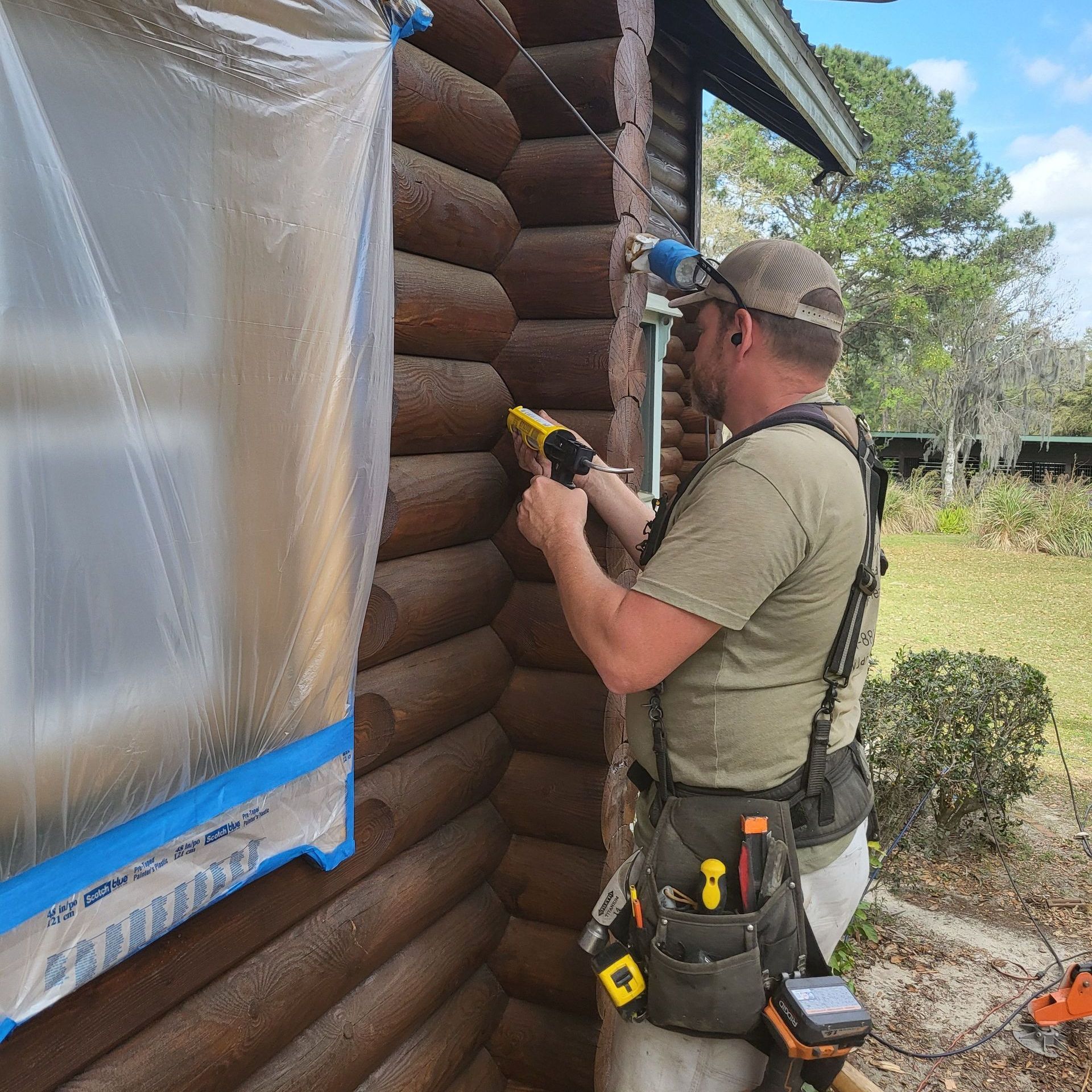
A detailed, line-item estimate from a log restoration specialist gives you credible documentation to submit with your claim. This is where companies like Log & Timber Solutions come in they provide the professional log home damage assessment homeowners submit alongside their claims, routinely walk adjusters through log-specific repair steps and costs (which often results in approved addendums, since a well-scoped restoration still saves the insurer money compared to a rebuild), and then perform the log home fire restoration services once the claim settles. Homeowners regularly call just to have the process and cost steps explained before the adjuster's first visit.
If the adjuster's number still comes in low, you have another card to play: call the builder or manufacturer of your home and ask them to walk the adjuster through the repair. Adjusters generally listen to the people who built the structure. Lack of knowledge (not bad faith) is usually the issue, and the fix is putting knowledgeable people in the conversation.
Log Home Fact: About 80% of log home insurance claims are roof claims. Actual log damage like rot or structural failure is usually classified as a maintenance issue, which is why keeping up with staining, sealing, and annual care directly protects your future coverage.
Storm Damage: Lessons from Real Recovery Work
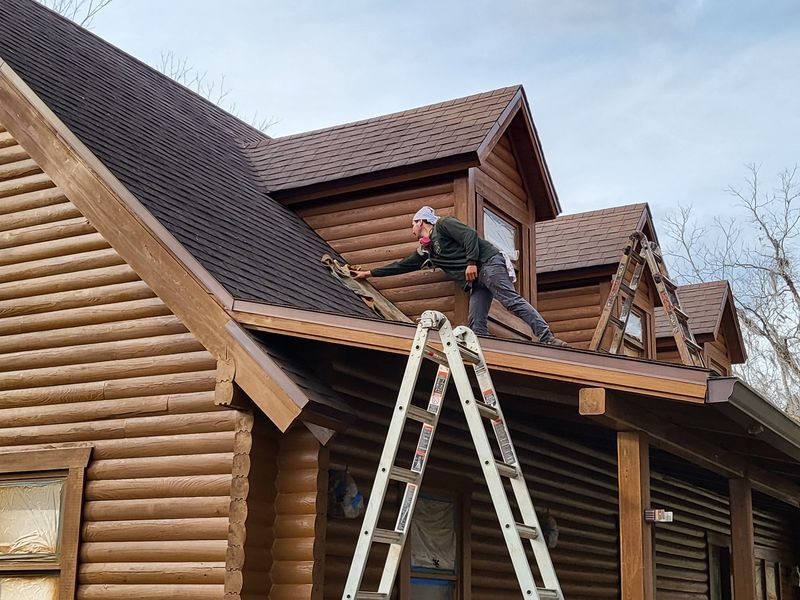
Storm claims bring their own patterns: wind-thrown trees punching through roofs, impact damage to log walls, and water intrusion right at the roof-to-log intersections where flashing and sealant take the hit.
Large-scale events prove the point about acting fast. The storm damage cleanup after Hurricane Helene showed how quickly wet logs turn into long-term problems when recovery drags. Water that sits in log walls invites rot and insects and damage that shows up eight months later is far harder to tie back to the storm on a claim than damage documented in week one.
Two coverage realities worth knowing before you file. First, hidden damage that traces back to a covered peril (a roof leak from storm damage, smoke absorbed from a fire) is generally claimable, even when it surfaces later; damage from deferred maintenance or normal settling is not. Second, insurance covers damaged areas only, think of it like replacing damaged floor tiles, not re-tiling the whole floor. If a tree takes out one wall and it gets blasted and freshly stained, you may end up with one crisp wall against three weathered ones. Policies now require matching "as close as possible," not exact matching. If the contrast is drastic, push your insurer to correct it; minor shade differences generally aren't actionable, and unifying the whole exterior yourself can run $20,000–$30,000 out of pocket. Factor that into your settlement conversations early.
After the Settlement: Restoring Your Log Home Right
Once the check clears, the last decision is the one that determines how your home looks and performs for the next 30 years: who does the work. As one insurance specialist put it, you don't hire a helicopter repairman to fix your airplane. A general restoration company treats your home like a framed house with wood on it. A log specialist understands log matching (blending new logs with decades-old ones), moisture behavior, chinking systems, and the staining and sealing schedule that protects everything they just repaired. And one rule with no exceptions: never paint a log home. Paint traps moisture and causes rot, stain and seal is the correct system.
That brings us back to where we started. An ounce of prevention really is worth a pound of cure:
- Insure smart before anything happens. Only a couple of carriers truly specialize in log homes. Find them through log and timber shows, a search for log home insurance, or a referral from the contractor who built your home.
- Maintain on schedule. Rinse your logs each spring to prevent sediment buildup and decay, and keep your stain and seal current, a documented maintenance history is claim protection.
- Mitigate for wildfire. Clear brush, trim trees 10–15 feet up, keep debris and combustibles away from exterior walls, and install shutters to block ember intrusion (embers through windows cause interior fires even when the logs survive). Firefighters prioritize defensible, well-maintained homes when a wildfire moves through.
The homeowners who prepare before the storm are the ones whose claims go smoothly after it.
From the Job Site: We've seen adjusters recommend rebuilding an entire home when the honest scope was replacing a handful of logs and restoring the finish. When the contractor and the insurance company sat down and agreed on the real repair, the homeowner got their home back faster, the insurer spent less, and the family never lost the house they built. Knowledge on both sides of the table is what makes claims work.
Frequently Asked Questions
What's the best way to document a log home fire damage insurance claim?
Start before anything gets moved or cleaned. Take wide shots of every room and elevation, then close-ups of log checks, chinking lines, corners, and roof intersections. Add a video walkthrough with narration, a dated inventory of damaged belongings, and a running claim journal of every conversation with your insurer. Then pair all of it with a line-item repair estimate from a log restoration specialist, thorough evidence plus a credible professional scope is what strong claims are built on.
Does homeowners insurance cover log cabin storm damage repair?
Generally yes, when the damage comes from a covered peril like wind, hail, or falling trees, including log-specific work like abrasive cleaning, restaining, and resealing, provided the home was maintained. Policies don't cover neglect, settling, or pre-existing deterioration, and they cover damaged areas only (with "as close as possible" matching to the rest of the home). Check your perils section and your deductible structure, percentage deductibles of 1–10% apply in many high-risk counties, before you file.